
Using Technology To Cope With Mental Health
Originally published in the Harbinger
With technological advances occurring by the second, there’s a society dependent on technology and apps to guide it. One of the newest additions: applications used to manage the mental health of their users.
Apps such as “Daylio Journal” and “Moodpath” have been created to help users cope with mental illnesses in different ways.
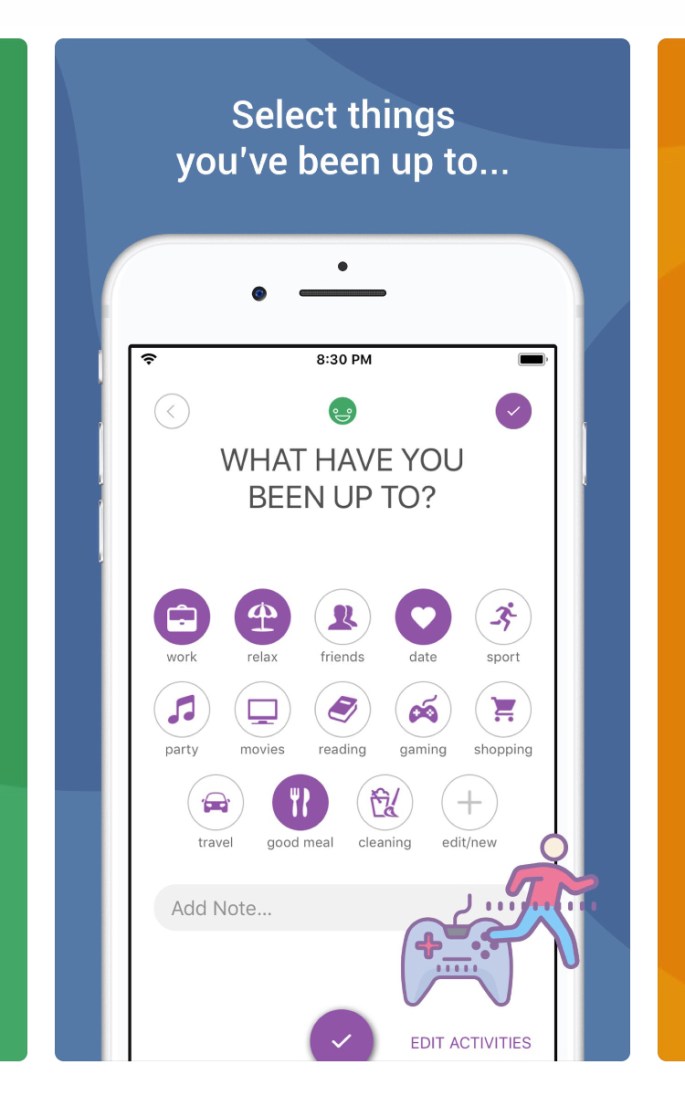
Daylio Journal serves as a journaling app, where the user doesn’t actually have to even type a single sentence.
The app tracks your mood, achievements, and activities by asking questions such as, “How are you?” and “what have you been up to?”
Daylio gives the user a set of emojis and icons to choose from to answer these questions, also giving the user the option to add more emojis and icons to the set.
The app uses the responses to create charts, giving users the opportunity to observe and track their mental health.
The growing number of installations of apps such as Daylio Journal prompts the question of whether it is a good idea to use them.
“I think apps like these are a great idea, especially for teens who hide their depression from their family and friends,” said Briana Sterling, a student.
The high rating of the apps suggests that they are successful with helping users cope with their mental obstacles. Moodpath has a rating of 4.7 out of 5, and Daylio Journal has a 4.8.
It must be taken into consideration that counseling can be costly for some individuals, as a session can be anywhere from 75 dollars to over 200 dollars per session.
Despite the cost to speak to a professional in person, there are teens who feel that this is the better option.
“I prefer counseling because it gives me a chance to say whatever is going through my mind and know I won’t be ashamed. Seeing another person and telling them is not the same as telling an app,” said Ashley Pineda, a junior at MLEC.
However, not everyone wants to sit alone in a room with a stranger, talking about issues they’ve been scared to even admit were ever there.
This app is free, and accommodates teens in a society surrounded by technology.
“I know people who are depressed and dread going to a therapist, because sometimes teens are forced to go to therapy in the first place. I feel like if it’s an app, and a teen chooses to journal their feelings, they would be more expressive and actually experience relief,” said Sterling.
Mental Health itself is an issue that should be addressed. It is important not to neglect the fact that there are individuals who struggle with maintaining their mental health. In this article, I wanted to present an option for coping with mental health: technology. As mentioned in the article, we do live in a society that has rapid technological advances, so it is no surprise that there are apps made with the intent of helping people manage their mental health. Although not everyone agrees with whether or not using apps like these are effective, using them is still an option that I wouldn’t want anyone to miss out on.
 Inside an Optimist's Mind