

JUULS

JUULS: The Full Picture

As each day passes by, more and more people are using JUULs and e-cigarettes to vape, whether it is in restaurants, the back of the schools, or the mall. Many are under the impression that using these e-cigarettes is the safer option, or the the worst thing to ever happen. Little understand both sides.

“I know some people who [vape] that do it for the fun of it and how it makes them feel. There are also people do it because they see others doing so,” said Faith Beckford, a sophomore at MLEC.

The popularity of the Juul e-cigarette has skyrocketed since it was first introduced in 2015. Sales for this company has gone over 800 percent. From college campuses to beaches, there is bound to be someone vaping, seemly having the time of their lives.

“I see people vape just about anywhere, like in malls or in supermarkets. A lot of people use JUULS, ” said Tracy Bojorge, a senior at MLEC.

Many teens continue to vape, not thinking about any adverse effects e-cigarettes may cause. In their heads, the act of vaping is usually seen as “fun” and “cool.”

However, a pod alone has as much nicotine as twenty cigarettes. The consumption of too much nicotine leads to cardiovascular, and respiratory problems. It has also been proven to debilitate a person’s control over their impulses.

“I think e-cigarettes cause just as much damage. It still has chemicals, and when people smoke the vape they think it’s harmless. They’re actually dangerously addictive,” said Zhyenda Bain, a Sophomore at MLEC.

With flavors ranging from mint to fruit, and its portable containers, its allure makes it very easy for teens to get addicted.

Although there has been a ban on some of the JUUL flavors recently, now that people are addicted, they may go to great lengths to retrieve a pod.

While the adolescents vaping think that the action has no effect on them, exposure to the glycerol in the vape can lead to excessive irritation-eyes, skin and throat, redness, itching, or burning.

When used properly, however, using a JUUL pod comes with its benefits. E-cigarettes are meant for people to reduce their use and addiction to tobacco ones, as long as there is a set goal in mind.

“When used as a complete replacement, rather than in addition to cigarettes, they are a preferable alternative for smokers who haven’t had success with medically proven approaches,” said Dr. Linda Richter on the debate of whether or not cigarettes can help quit smoking.

And while smoking tobacco cigarettes can make having an anxiety attack 5 times more likely, vaping is known to help ease anxiety.

“Tobacco can cause sleeping problems. The sleep deprivation coupled with shortness of breath may lead to stress, anxiety, and panic. Vaping doesn’t cause any of the above problems,” said the Depression Health Network.

With the adverse health effects and addictiveness of JUULs and vaping presents, it is best to be used by those quitting tobacco or with a doctor recommendation. Otherwise, like in the case of teens who think juuling is “cool,” JUULing will cause negative impacts on one’s health, physically or psychologically.
Hate Groups

Hate Groups Are On The Rise: But Why?

Originally Published on the Harbinger


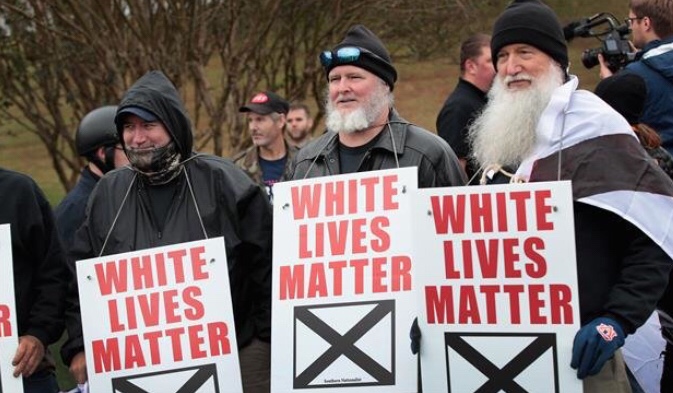
From the very founding of the United States, there has been racism, prejudice and hate present. Even after laws were put into place to avoid discrimination and give every race and gender equal opportunity, there is one thing still evidently present: hate. As of 2018 there have been 1020 hate groups reported and, though the times have changed, different factors have contributed to the increase of hate groups. 

“There is a 30% jump in hate groups that coincides with [Trump] running for office and winning the presidency… Trump plays on fears of  immigrants to build up his base,” said Heidi Beirich, the director of the Intelligence Report, which is published quarterly by the Southern Poverty Law Center. 

Trump has made many allegations towards immigrants, calling them “rapists, criminals,” and so forth. And as a result, many have become fearful of and hateful towards immigrants, believing that they make no contributions the country, and live a life of fear. 

Just as there are people afraid of immigrants, some hate groups and white supremacists are afraid of the increasing diversity occurring in the U.S. These white supremacists believe that, because they are superior, other races shouldn’t be present and that there is no need for diversity.  

“We are now very close, maybe 20 years away from whites being a minority in the United States. And that change freaks some people out, people who are uncomfortable with cultural change and increased diversity and multiculturalism,” said Beirich. 

The response to this fear is an increasing amount of hate towards minorities, the government, and others. Throughout most of the 50 states, there are different clans, from anti-LGBT groups to neo-confederates to the racist skinheads. And since these groups are acting out of hate and anger, violence is often followed. 

“They want to kill minorities, or Jews, or whatever the case may be because they believe that white people should run this country and they’ve decided that the only way to achieve that is through weapons of war,” added Beirich. 

Another factor contributing to the rise of hate groups is social media. With social media platforms such as Facebook and Instagram many of these hate groups now have the means to spread propaganda, recruit members, and organize rallies. Unlike people decades ago, users now have the ability to see all that hate groups have to say with as little as a click or a scroll. 

In Florida, there have been 75 active hate groups reported, the third highest in the United States. Not only is Florida home to a great amount of peopleover twenty millionthere is also divisiveness in the state, which is especially seen during the election.  

“States like California, Florida, and New York that have large populations are often at the top of the list for hate groups… California and New York, when you look at the number of hate groups per capita is actually much lower than Florida… That reflects partly that Florida, although the southern part of the state is very cosmopolitan and very multicultural, the panhandle and the northern area are more like their cousins in the deep south,” said Beirich.  

Seeing as how many social media platforms that are trying to perfect algorithms which will prevent hate groups from continuing to gain momentum and diversity in the U.S. are also increasing, it is projected that the amount of active hate groups will also continue to rise. The hate that resided in America before the 1960s is still here today, and for the time being, will continue to be evident in clans throughout the country.


Photo taken by AFP