Small & Black Owned Businesses

Support The Little Guys

By Rhobie Toussaint

Original published on The Harbinger


It is no secret that COVID-19 drastically impacted many things – the way people perform everyday tasks, the concept of “normal,” and the economy. And in the midst of it all, small businesses took a hard hit. By May 2020, thirty million unemployment claims were made, many being from small businesses.

Hence, there are many reasons why customers should support small/Black businesses.

Support for a small/Black is support for their communities. With the coronavirus bringing an economic crisis to many, small businesses have suffered greatly. When a small business suffers, so does the community and the workers involved. There have been over 100,000 small businesses that closed as a result of COVID-19 and its economic impact, according to the Washington Post.

Thus, supporting different businesses that may not have the resources to survive an economic crisis would greatly benefit them, as well as different communities.

Many small Black-owned businesses manufacture/sell a wide variety of items, from clothing to hair products. Support for these businesses will not only help them flourish and succeed, it will also play a role in closing the racial wealth gap that is still so prominent in American society.

The Brooking Institution found that in 2016, a typical white family’s net worth is around ten times more than the net worth of a typical Black family, further showing how the support of Black-owned businesses has a correlation to closing the wide racial gap.

Small businesses usually have a more personal, ‘homey’ feel. Owners of small/Black-owned businesses take the time to send their products in a package that is carefully packaged with a personal message of how much they appreciate the purchase. These hard-working individuals put their love, appreciation, and effort into every single package and add their own personal touch to it.

“Owners of small businesses are usually doing something that they are passionate about. I think it’s why they put so much detail into their products and their packaging. The ‘thank you’ notes I receive from them when I order something feel meaningful and genuine,” said Laudith De Los Santos, a senior at MLEC.

These small businesses are often passion projects or for a good cause. Behind many small owned or Black businesses is a story of wanting to create change or doing something in their community that has not been done before. As a result, owners of these businesses, and the work that they do, are fueled by their passion, making the support for them that more important.

Kaylin Berner, a music therapist in South Florida, is an example of someone using their passion and their business to help others.

“I do two different categories of music therapy. We do a broad range, this is something I do…It’s cool to be able to provide those services. A lot of the time these people wouldn’t have the opportunity to get into music but this offers them a chance.”

Berner is a music therapist who aims to advocate for those who are disabled people by providing them with “normal” therapy — but also taking the time to innovate different kinds of treatment. Her small business is an example of genuity and true allyship for the betterment of society.

Small/Black business owners generally put a lot of care into the work that they do, all while trying to provide consumers with quality products. Unfortunately, the economic crises caused by COVID-19 caused a lot of these businesses to close down, which is why the support for them is more important than ever.

Small and Black-owned businesses are essential in so many ways; it is time that we support them in the way that they always support us.


Although this article was originally published in December, it is still as important to support small and Black owned businesses. They put a lot of time, effort, and care into the products they create, as well as the services they provide.

Later this week, I will be promoting different Black owned businesses on my Instagram page @inmyoptimisticmind, so if you’re at a lost of where to start, you can definitely check it out.

All the love,

Rhobie

Fashion

I’ve worked with Je’nique for a few months now as we’re both on the executive board of a club at my school. One thing I’ve noticed, however, is her great fashion sense, and so this is what I asked her about when interviewing her.

“Fashion has been something that I’ve always had an interest in from a very young age. I would always wear my moms heels and her clothes around the house. With fashion, I love that it gives you the ability to express yourself through clothing, whether it’s a custom outfit or a personalized piece of jewelry. As far as my aspirations with it, I am an upcoming model. I hope to encourage others to start representing their self for who they are because at times I know we tend to want to live up to others expectations of us which may be for you to have a certain aesthetic. Most of the time that isn’t truly who you really are.”

-Je’Nique Hayden, sophomore, health/nursing assistant

[New] Normal

My New Normal

By Rhobie Toussaint

On March 13, I woke up after snoozing my alarm numerous times. Little did I know, March 13 was also the last day I woke up at 5:30 AM, went to school, and saw my school friends. It was the last day I knew what “normal’ was.  

It is currently a little past Mid-April, over one month after my last day at school (though I didn’t know it was my last day at the time). [Mostly] Everything has changed. My mornings on weekdays begin with classes via Zoom that I dread to wake up for. Sometimes I wake up early enough to do my devotional before “class,” and other days I do them right before falling asleep again. 

Every day my mom calls my name over five times to help her with something. She, a teacher, also has to work from home now. I know this is all new to her too, but I can’t help rolling my eyes at least once every other day before reluctantly rolling out of bed, dragging my feet to the living room, and plastering a fake smile on my face right before  saying “yes, mom.”

There are times when I am so lucky that my mom remembers that she needs something else right before I open my bedroom door. I take a deep breath, turn around and walk right back to the living room. 

Whenever I exit my room it is always for a specific reason — to remind my dad to take his medicine, to eat, to go to the bathroom, to step outside for five minutes so I can remember what it feels like to be outside and then washing my hands again, things of that sort. 

And on the (very) few occasions when I get to step into the car and head to Publix for groceries, I see masks on everyone, everywhere. But it doesn’t seem like anyone’s afraid. It’s as if they are simply used to this, as if they have accepted that this is their new normal.

Then when I get back home, I bring the groceries inside, change my clothes, wash my hands, and then sanitize everything (safety precautions). By then, it is usually time for another nap, but sometimes I get a reminder that I have an assignment due in a few hours instead. On those days, I glare at my laptop before opening it. 

Some days I write, some days I ignore the news alerts of how many new cases of COVID-19 there are in Florida, but of course, I can’t forget the days when I lay in bed for hours with a million thoughts swirling around in my head.

Some of them are so convoluted that I can barely make any sense of them. 

If I want to talk to my friends, then I have to call them. And if we want to see each other, we FaceTime. We reminisce on the days where social distancing wasn’t in place, before realizing that just over a month ago, our lives were completely different. 

Just over a month ago I was planning a trip to the beach. Just over a month ago I was allowed to go to church services throughout the week and I was able to hug everyone after service was over. 

Just over a month ago, my “normal” was different. And now, it will never be the same.


In the words of an article I read, “It’s a slow life, this social distancing thing.” Even when I was writing this piece, it was still mind-blowing to think about the fact that EVERYTHING was different just over a month ago. And even after this passes, nothing will ever be the same. 

Every day can feel like a blur when you’re home all day, every day, but the extra time also leaves an opportunity to self-reflect, to make changes that you’ve been putting off. You can take up new hobbies and try out new things. 

Right now, all of us have a different ‘normal.’ In fact, the very picture of what normal looks like in our minds is probably all distorted. But we can make something of it. 

Make something of your new normal. 

November 29, 2019

Native American Heritage Day

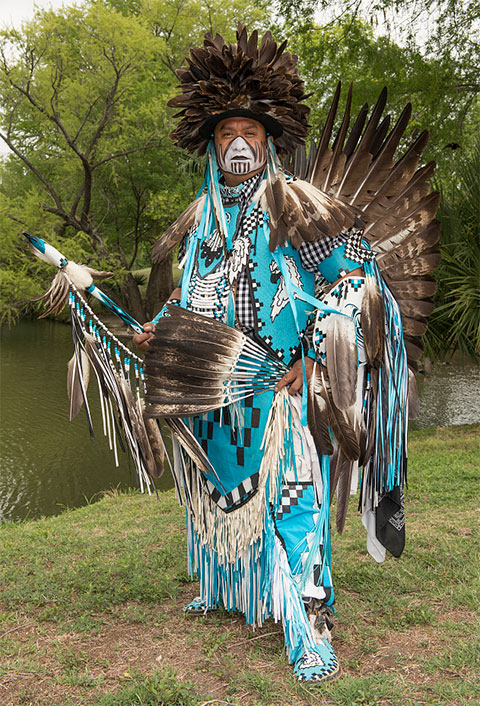
November 29, 2019 will serve as Native American Heritage Day—a holiday dedicated to acknowledge and celebrate Native American culture, and their contributions to the United States, something calendars failed to notify.

In 1986, President Reagan declared that the week of November 23 to November 30 would serve as American Indian Week. In 1990, President George H.W. Bush declared that November will be Native American Heritage Month, and it has been approved to be so annually. 

“This month, we recognize the contributions made by Native Americans since long before our founding, and we resolve to continue the work of strengthening government-to-government ties with tribal nations and expanding possibility for all,” said former President Barack Obama in his 2015 proclamation. 

“Thanksgiving and the month of November, Native American Heritage Month, are an important time for the nation to renew a year-round commitment to honoring and strengthening the relationship between tribal nations and the United States,” said Jeferson Keel, President of the National Congress of Amderican Indians (NCAI), during a statement. 

More often than not, the contributions of Native American tribes to the United States are forgotten. It was these tribes who played a role in providing democratic ideas which were used by the framers of this country’s constitution. These are also the same people who first grew crops such as potatoes and helped the Europeans survive by showing them how to farm effectively. 

“They used techniques such as burying fish and burying different metals which was useful because it gave nutrients for the plants and kept the soil rich,” said Jiles Colemen, who is from Native American descent and has recently posted a now viral TikTok video on the realities of Columbus day.

They have made contributions to the U.S. military as approximately over 24,000 Native Americans served during World War Two. In current times, there are over 240,000 Native Americans who serve in the US Armed forces, according to the US Department of Defense.

These are just some of the many things Indeginous Tribes helped with in the country, which would make them and their actions vital to the United States even before it became the United States of America, and are many of the reasons to pay attention to Native American Heritage day. 

Despite the significance of their contributions and traditions to our lives, there is not enough focus on Native American Day and month. There are a multitude of schools that fail to include the teaching of said contributions in the history curriculum. 

“Native Ameircans are not given the recognition that we rightfully deserve. We’re looked at as more of a laughingstock and historical figure than we are as a people. I think that’s because we were so diminished in history. The educational system has failed to educate our youth on the contributions of my people,” said Maya Gillogly, whose family is part of the Sauk tribe and is an activist for Native American Awareness through social media.

It is important that we know and understand our history, and for everyone in the U.S, whether we care to admit it or not, Native Americans are a part of that. 

“It breaks my heart that we were the main force that built the country and now the country lays on our backs,” said Gillogly. 


Native American Heritage Day was a few days ago, but this story is still important. I think it is important to recognize that Native Americans are indeed still here and have contributed a lot to the United States. They should not be forgotten, so I wanted to take the time to bring recognition to Native Americans and their Heritage Day.