Melting Glaciers and Climate Change Effects
Glaciers are melting at alarming rates, the global climate is steadily and consistently rising, and mass extinction is nearly inevitable.
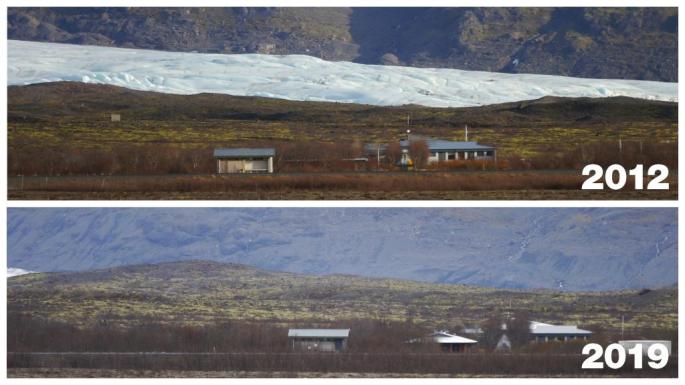
Just this summer, there was a memorial held in Iceland for Okjökull (OK), a glacier that melted there in 2014. Its cause: climate change.
“ OK is the first Icelandic glacier to lose its status as a glacier. In the next 200 years, all of our glaciers are expected to follow the same path. This monument is to acknowledge that we know what is happening and what needs to be done. Only you know if we did it,” said the memorial plaque.
Global warming comes from the excessive amounts of greenhouse gases being emitted into the atmosphere. These releases have resulted in the melting of ancient glaciers, that previously stayed intact for numerous decades.
“The natural greenhouse effect has been interrupted by humans who have increased the amount of greenhouse gases in the air, the most common being carbon dioxide. The carbon dioxide in the atmosphere is trapping too much heat which in turn leads to the melting glaciers,” said Edelma Saenz, a senior at MLEC who studied climate science over the summer.
As the glaciers around the globe begin to melt, sea levels also start to rise.
“The oceans tend to absorb a lot of heat so as the average temperature continues to rise the ocean has more heat to trap. This leads to thermal expansion in which the volume of the water rises,” added Edelma.
Although OK is the first glacier to melt in Iceland, there have been others in areas such as West Antarctica. The rise in sea levels that comes from this puts the environments and people around the globe at risk of suffering from the negative effects.
One of the main risks of sea level rise is the possibility of areas with residents going underwater. islands, and peninsulas such as Florida will likely be the first to experience this.
The health of residents in different areas may become threatened as a result of glacier melts and sea level rise. Organisms that were once trapped in said glaciers will have the ability to get into other places, possibly posing health risks.
“There could be dormant microorganisms residing in the ice that because the glaciers are melting can come out of the ice. We’re not sure if they are going to be detrimental to human health or not. We might potentially have bugs in there that could become a problem,” said Genesis Perez, the AICE Environmental Management teacher at MLEC.
In response to the many effects of climate change, such as the Icelandic glacier melting, already becoming noticeable in many countries, many teens are taking it upon themselves to demand for change. Videos and photos urging the community to take care of the environment have gone viral, Students in Florida have gathered for climate change strikes.
“We can’t continue living like this. Earth is our home and it feels like we’re just neglecting it. We should come together and work together to help our environment,” said Catherine Mena, a Junior at MLEC.
The effects of climate change are becoming more apparent, and the melting of glaciers is just one of them. The harming of animals, people, plants, and all that is in the Earth will stem from these effects. Polar bears will continue to lose their homes. Sea levels will continue to rise. The Ozone Layer will continue to deplete. I wanted to put up this article because we cannot afford to avoid this problem forever, and I want to spread awareness in every way that I can.
Photo Source: https://observers.france24.com/en/20190621-iceland-photos-skaftafell-glacier-climate-crisis
 Inside an Optimist's Mind