
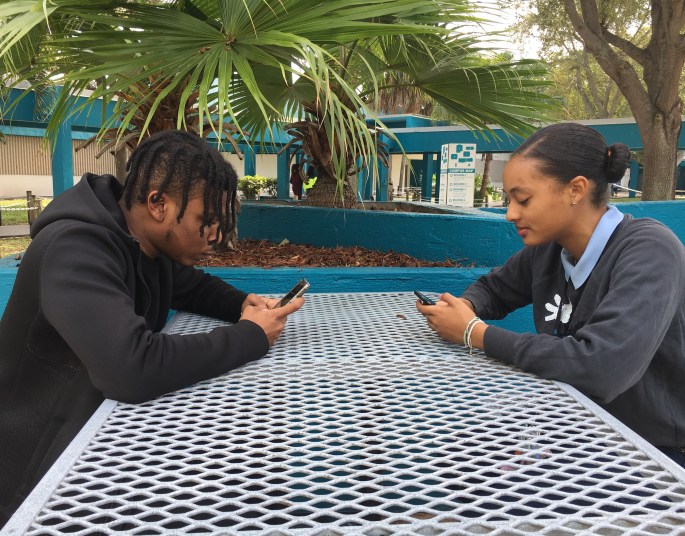
Microwave Generation
By Rhobie Toussaint
If one were to compare all of the major social media platforms that have appeared throughout the years, from MySpace to Facebook to Snapchat, a similar trend would be seen– modern means faster.
Coined by Raymond James, the term “Microwave Generation” sums up the impatience of Generation Z, those born between the years of 1995 and 2015.
As people consume more information through the internet and different social media platforms, they also start to expect technological updates at a faster speed.
For example, 4G, the fourth generation of cellular technology has an average speed of about 10 megabits per second (Mbps), but 5G, which is not fully researched or developed, is already being advertised by telecommunications companies.
5G proposes some health concerns due to radiofrequency radiation and security violations. However, to most people the benefits seem to outweigh these dangers – with higher download rates, internet with even higher speed, and more, the microwave generation is bound to make some sacrifices for 5G.
The high expectations and need for constant renovation seen in Gen Z is ultimately what drives their impatience. Anything less than the speed and consumption of information that they are used to can lead to instant dissatisfaction.
“Most of the people our age can barely remember a time before the internet was as big as it is now, and in some ways, our generation does want that information more,” said Andrew Easterling, a junior at MLEC.
But this is not Gen Z’s fault. Nothing more and nothing less can be expected from a group of people that grew up during a time period of the latest smartphones and fastest internet speeds. If millenials or any other generation grew up with the same circumstances that Gen Z has, it is more than likely that they’d share similar traits.
“My parents are Gen X, and I’ve seen them, people even older, and everyone in between uses the internet for information, ” said Andrew.
Moreover, the expectations of more information in little time goes beyond those of Generation Z. It is a societal trend. Many who can have these technological advances are prone to expecting more– more technological advances, more information, more access.
“From my understanding, most people actually want constant updates and upgrades, but that’s just because of the times we are living in,” said Adrien Rivero, a senior at MLEC.
We have come to a point where it is only natural that people, of different age groups and ranges, are searching and yearning for quick renovation.
“I think people in general are always looking for change and improvement in whatever it is that they do,” added Rivero.
This isn’t just a microwave generation. It is a microwave society.
 Inside an Optimist's Mind