Change-makers

The Racial Revolution – Young Activists Making A Difference

By Rhobie Toussaint

Originally Published on The Harbinger

Imagine seeing someone of your demographic being murdered by a police officer: one that should have been a civil servant of the people, and ultimately, the embodiment of law and order.

Political commentaries, memes across social media, class discussions, and even revolutionary black lives matter protests unleash in unison, taking the media by storm soon after. Coming across new stories and numerous posts on social media about their deaths, among them are comments calling him a thief – an irresponsible alcoholic who merited his downfall. 

Now, imagine seeing that content almost every day for months straight. This is exactly what kids, teens, and young adults in the Black community have been facing. 

Yet again, the urgent outcries of minorities – the advancing resistance that was always present between push and turns – goes ignored under a system of ingrained racism. It is no surprise that viewing these malicious acts, from time and again, has taken a toll on the minority youth.

“Seeing these things affect my mental health drastically. I don’t want to use the word “depressed,” but it did kind of make me feel depressed, and it enraged me simultaneously,” said David Way, an MLEC alumnus.

Among these “things” is the video of a police officer who subdued a Black man, George Floyd, with a knee on his neck for eight minutes. He was motionless, without a pulse, for the last three minutes of unwarranted restraint.  

 “When I looked at the video of George Floyd, I was so sad… sad alone isn’t even the right word. I was sad and mad. I felt helpless. I wanted to honestly scream,” said Gabrielle Forbes, a rising senior at Dr. Michael Krop Senior High School.

Like many of the videos of the killing of Black People on the internet, the video of George Floyd was also something that brought a feeling of fear within a lot of Black youth. Many ponder how that could have easily been them, their father, brother or another relative. 

“Seeing the George Floyd video, my immediate emotion was fear. I don’t live a fearful life but definitely felt it while seeing that transpire and seeing how the police have that much power,” said Akil Cole, recent graduate of Hialeah-Miami Lakes Senior High School. 

While the viewing of these kinds of contact did take a mental toll on the youth of the Black Community, these individuals used that fear, anger, and sadness to show initiative and take a stand – like many of their counterparts. 

“After seeing that video, I felt like not being explicit about where I stand on the issue of Black Lives Matter and on the issue of police brutality was me being complicit, especially because as a Black man my voice is being called for. So I felt a responsibility to at least voice my opinion and to be active in a way that’s like dispelling misconceptions,” said Akil. 

Along with using his platforms to voice his opinions and educate others, Akil has been volunteering for the When We All Vote, My School Votes program to build student-led teams within institutions and register eligible high school students and alumni.

Like Akil, David Way has been using his social media platform to raise awareness and educate his peers. 

“And then it’s sad how even some of our black youth may not understand what is going on, why we’re protesting, and how they’re treated differently. I feel like the big elephant in the room, that is racism, needs to be addressed rather than never talked about, and I try to address it through social media,” said David. 

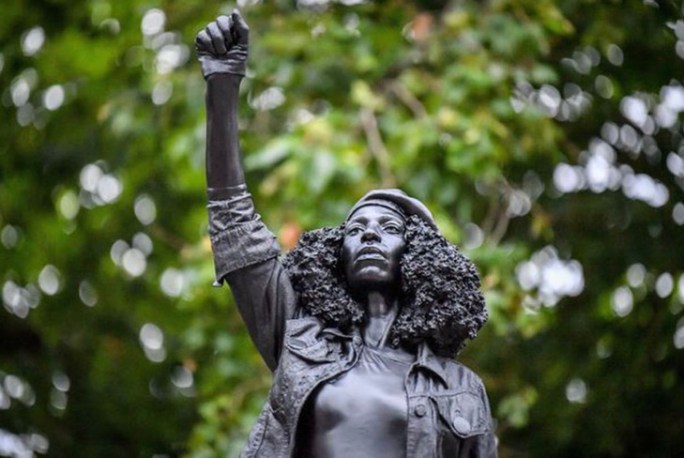
Amid their hurt and outrage, rising senior Gabrielle Forbes and some of her close friends decided that they would found an organization, Letters to the System, to give young people in the Black community a means of expression. 

“Personally, I don’t know of a lot of organizations that would provide me with an outlet for this kind of thing. But that’s why I made my organization because I saw the lack of support for Black youth in the community. Letters to the System is an outlet for the youth to express how they feel to their local officials so that they can make change in any way that they can,” said Gabrielle. 

Akil, David, and Gabrielle are just three of many young people in the community who did not let the discrimination and acts of violence done to others in the community deter them. Instead, they are doing everything in their power to make a difference, ensuring that they are a part of the change. 

“I for one know that I am tired of being tired. Black people are tired of being suppressed, treated differently, and killed. It’s not fair,” echoed David. 

“We need a change and we need a change now.”


This one hit home.

Even after conducting the interviews, I worked on this article for weeks, wanting nothing more than to make sure that I did right by the cause and by the people I interviewed.

I couldn’t be happier with how it came out.

If there’s anything that I learned from these past few weeks, it’s that now is not the time to remain silent. The oppression that people in the Black community faced has never went away, but instead took place in different forms. I can’t go to protests and I don’t have much money to donate, but I can write, and I have the ability to spread awareness in any way that I can.

Like Akil, Gabrielle, and David, I want to help the cause. I want to make a difference. I want to be part of the change.

It doesn’t have to be like this, and I know that it can get better.

And so, I encourage you all to spread love, educate yourself on the matter if you haven’t, and to be an ally.
Puerto Rico

Earthquakes In Puerto Rico

By Rhobie Toussaint

Since Hurricane Maria in 2017, parts of  Puerto Rico are still in a state of devastation. The death toll reached just over 2,000 people; the agricultural yield has a loss of about 780 million dollars, and there are people still emigrating from Puerto Rico to the U.S. due to the state of the island. 

Now, another kind of natural disaster has hit the struggling island— earthquakes.

The earthquakes in Puerto Rico have left homes leveled, caused the displacement of  residents with nowhere to go, and lead to one known death. The island has been experiencing consecutive earthquakes, and Puerto Ricans have been experiencing their effects since December. 

“Personally, it’s been devastating seeing the people of Puerto Rico struggling with the many disasters that have been happening lately. Knowing they just suffered from a horrible hurricane that destroyed their homes and communities, many people probably don’t have the strength to go back to shelter,” said Jean Laguerre, the President of MLEC’s Caribbean Culture Club. 

These earthquakes have had magnitudes as high as 6.4, which was the magnitude of an earthquake in January that took place in Puerto Rico. Records show that these earthquakes resulted in about 5,000 Puerto Ricans to be unable or unwilling to return to their homes, meaning that many are without shelter. 

What’s happening in Puerto Rico is extremely unfortunate. They were just starting to recuperate after hurricane Maria when the first earthquake hit. My family home on the island is in shambles and there’s nowhere for my relatives to go,” said Krystal Alverio, a Puerto Rican student at MLEC. 

Places such as the Poinciana Condominium in Puerto Rico, which includes medical, commercial, and residential floors, have become officially uninhabitable because of the structural damage. 

As a result of this, the Puerto Rico’s governor, Wanda Vasquez declared a state of emergency. 

The residents in  Puerto Rico are in desperate need of aid to restore their homes, and access other resources and necessities. But the country is not receiving all of the help it needs.  

Recently, there has been a video of a warehouse full of unused supplies which, according to Vasquez, has been there since Hurricane Maria. The video went viral, causing residents to take matters into their own hands by breaking into the warehouse and distributing the supplies themselves. 

The governor fired the commissioner of the National Emergency Management and Disaster Relief Agency, who claims he has not deprived anyone of accessing the supplies in the warehouse.

   After the earthquakes in January, Wanda Vasquez requested aid from the U.S., as Puerto Rico is a U.S. territory. The Trump administration, however, has imposed multiple conditions on Puerto Rico, and these conditions must be met before the island can access 8.3 billion dollars.

“After Hurricane Maria, congress has since approved $44 billion for recovery from the federal department housing and health. However, the people from the Island have had access to only $2 billion up to this month,” said Jean Laguerre.

 The officer of management, Chase Jennings, says this is to hold Puerto Rico accountable while helping them.  

Some parts of Puerto Rico have recovered, especially areas where tourists visit and stay. But for the most part, there are still people living on the streets who are begging for help, homes that haven’t been restored, and people yet to receive aid. 

“I visited the more touristy parts of Puerto Rico and while I was there I saw two people one had a sign that said something along the lines of, “I lost my home to hurricane Maria, I need a place to stay. It was sad to see because there was someone begging for a home next to booths that  tourists are visiting,” said Samantha Jimenez, a student at MLEC.

“It’s sad to see that years later, they have never really recovered and that the island has turned to covering that up to pretend that nothing is going on and people can visit,” added Jimenez.

Glaciers

Melting Glaciers and Climate Change Effects

Glaciers are melting at alarming rates, the global climate is steadily and consistently rising, and mass extinction is nearly inevitable. 

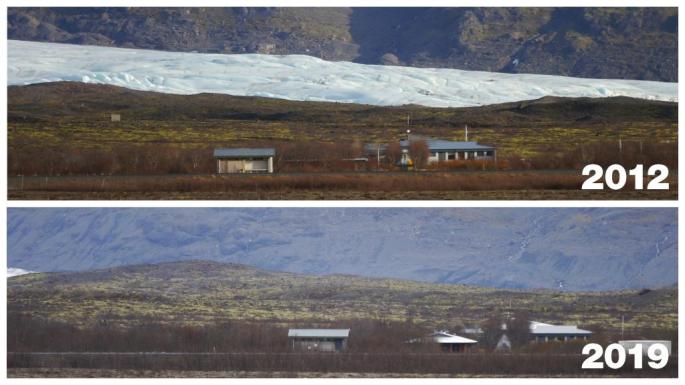
Just this summer, there was a memorial held in Iceland for Okjökull (OK), a glacier that melted there in 2014. Its cause: climate change. 

“ OK is the first Icelandic glacier to lose its status as a glacier. In the next 200 years, all of our glaciers are expected to follow the same path. This monument is to acknowledge that we know what is happening and what needs to be done. Only you know if we did it,” said the memorial plaque.

Global warming comes from the excessive amounts of greenhouse gases being emitted into the atmosphere. These releases have resulted in the melting of ancient glaciers, that previously stayed intact for numerous decades. 

“The natural greenhouse effect has been interrupted by humans who have increased the amount of greenhouse gases in the air, the most common being carbon dioxide. The carbon dioxide in the atmosphere is trapping too much heat which in turn leads to the melting glaciers,” said Edelma Saenz, a senior at MLEC who studied climate science over the summer. 

As the glaciers around the globe begin to melt, sea levels also start to rise. 

“The oceans tend to absorb a lot of heat so as the average temperature continues to rise the ocean has more heat to trap. This leads to thermal expansion in which the volume of the water rises,” added Edelma.

Although OK is the first glacier to melt in Iceland, there have been others in areas such as West Antarctica. The rise in sea levels that comes from this puts the environments and people around the globe at risk of suffering from the negative effects. 

One of the main risks of sea level rise is the possibility of areas with residents going underwater. islands, and peninsulas such as Florida will likely be the first to experience this. 

The health of residents in different areas may become threatened as a result of glacier melts and sea level rise. Organisms that were once trapped in said glaciers will have the ability to get into other places, possibly posing health risks. 

“There could be dormant microorganisms residing in the ice that because the glaciers are melting can come out of the ice. We’re not sure if they are going to be detrimental to human health or not. We might potentially have bugs in there that could become a problem,” said Genesis Perez, the AICE Environmental Management teacher at MLEC. 

In response to the many effects of climate change, such as the Icelandic glacier melting, already becoming noticeable in many countries, many teens are taking it upon themselves to demand for change. Videos and photos urging the community to take care of the environment have gone viral, Students in Florida have gathered for climate change strikes.

“We can’t continue living like this. Earth is our home and it feels like we’re just neglecting it. We should come together and work together to help our environment,” said Catherine Mena, a Junior at MLEC.


The effects of climate change are becoming more apparent, and the melting of glaciers is just one of them.  The harming of animals, people, plants, and all that is in the Earth will stem from these effects. Polar bears will continue to lose their homes. Sea levels will continue to rise. The Ozone Layer will continue to deplete. I wanted to put up this article because we cannot afford to avoid this problem forever, and I want to spread awareness in every way that I can. 


Photo Source: https://observers.france24.com/en/20190621-iceland-photos-skaftafell-glacier-climate-crisis

Mental Health & Technology

Using Technology To Cope With Mental Health

Originally published in the Harbinger


With technological advances occurring by the second, there’s a society dependent on technology and apps to guide it. One of the newest additions: applications used to manage the mental health of their users. 

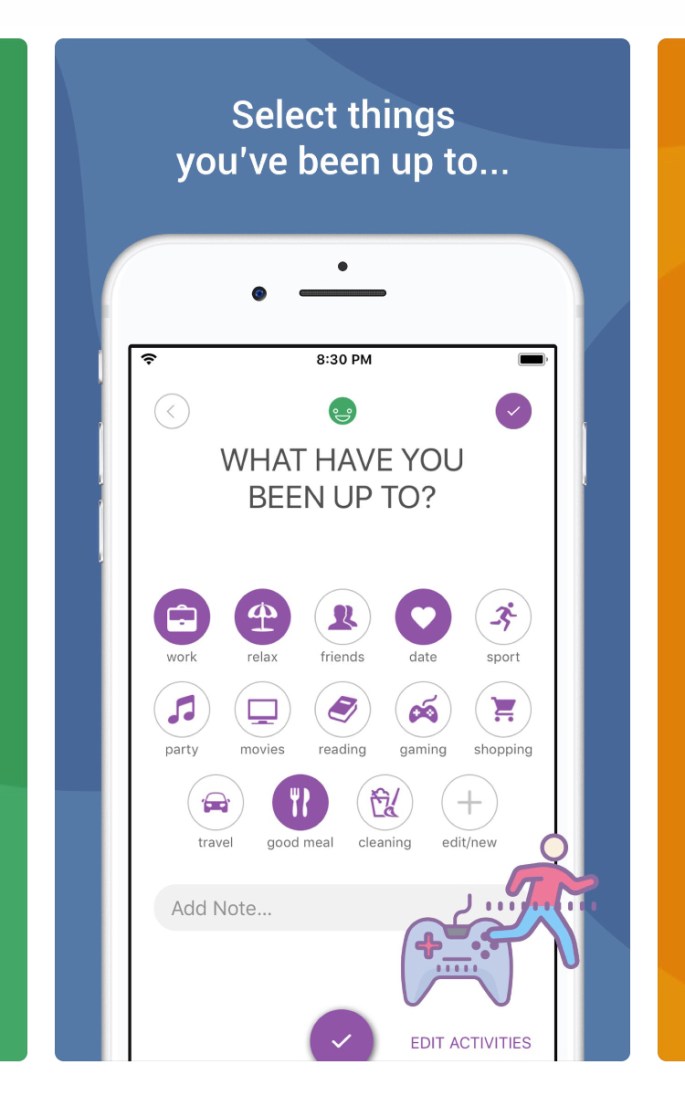
Apps such as “Daylio Journal” and “Moodpath” have been created to help users cope with mental illnesses in different ways. 

Daylio Journal serves as a journaling app, where the user doesn’t actually have to even type a single sentence. 

The app tracks your mood, achievements, and activities by asking questions such as, “How are you?” and “what have you been up to?” 

Daylio gives the user a set of emojis and icons to choose from to answer these questions, also giving the user the option to add more emojis and icons to the set. 

The app uses the responses to create charts, giving users the opportunity to observe and track their mental health. 

The growing number of installations of apps such as Daylio Journal prompts the question of whether it is a good idea to use them.

“I think apps like these are a great idea, especially for teens who hide their depression from their family and friends,” said Briana Sterling, a student. 

The high rating of the apps suggests that they are successful with helping users cope with their mental obstacles. Moodpath has a rating of 4.7 out of 5, and Daylio Journal has a 4.8.    

It must be taken into consideration that counseling can be costly for some individuals, as a session can be anywhere from 75 dollars to over 200 dollars per session. 

Despite the cost to speak to a professional in person, there are teens who feel that this is the better option. 

“I prefer counseling because it gives me a chance to say whatever is going through my mind and know I won’t be ashamed. Seeing another person and telling them is not the same as telling an app,” said Ashley Pineda, a junior at MLEC.  

However, not everyone wants to sit alone in a room with a stranger, talking about issues they’ve been scared to even admit were ever there. 

 This app is free, and accommodates teens in a society surrounded by technology. 

“I know people who are depressed and dread going to a therapist, because sometimes teens are forced to go to therapy in the first place. I feel like if it’s an app, and a teen chooses to journal their feelings, they would be more expressive and actually experience relief,” said Sterling. 


Mental Health itself is an issue that should be addressed.  It is important not to neglect the fact that there are individuals who struggle with maintaining their mental health.  In this article, I wanted to present an option for coping with mental health: technology.  As mentioned in the article, we do live in a society that has rapid technological advances, so it is no surprise that there are apps made with the intent of helping people manage their mental health.  Although not everyone agrees with whether or not using apps like these are effective, using them is still an option that I wouldn’t want anyone to miss out on. 

Hurricane Dorian

Devastation in the Bahamas

Originally Published in The Harbinger


Imagine roofs being torn off of buildings, houses being flooded with water, and cars flipped over and damaged. People have nowhere to turn, trying to brace themselves for impact. 

The devastation that would strike the Bahamas was one they could never truly prepare for. 

Dorian, a Category Five at the time it hit the Bahamas on Sunday, remained stationary for an extended period of time, causing mass damage to the country. Some houses there are mainly made of wood, not built to sustain a hurricane with a wind speed of 185 miles per hour. 

“The Bahamas isn’t suited to sustain hurricanes like that and it makes me worry for the next,” said Anite Augustin, a sophomore at MLEC. 

Videos and photos of the wreckage in the Bahamas have gone viral. Throughout the media, there is footage of water from the ocean reaching the second floor of a house, with pieces of furniture and appliances floating throughout the building. 

In many of the pictures online, one can see what is left of the cities, like Abacco city, affected: knocked down trees, collapsed buildings and water just about everywhere.  

The aftermath of Dorian has been described as completely catastrophic. Currently, the death toll of Hurricane Dorian in the Bahamas is about 40, and this number is expected to rise significantly.  The destruction within the country has also impacted residents in the United States, who have a connection to the Bahamas or loved ones there. 

“I’m Bahamian, so to see the destruction there makes me sad. Bahamas is my home and seeing the once beautiful place turn into a disaster is upsetting and hurts my heart,” said Mya Young, a junior at MLEC. 

Originally, Florida was forecasted to be in Dorian’s merciless path. However, Dorian changed course and was then projected to head North after hitting the Bahamas. While many Floridians are grateful that the hurricane did not cause a significant amount of damage here, there are others who almost wished that it hit Florida instead of Bahamas. 

“I felt frustrated about Dorian staying over the Bahamas for 54 hours. It was supposed to hit us… If it had hit Florida we would’ve been better suited for a hurricane like that and more prepared,” said Augustin.  

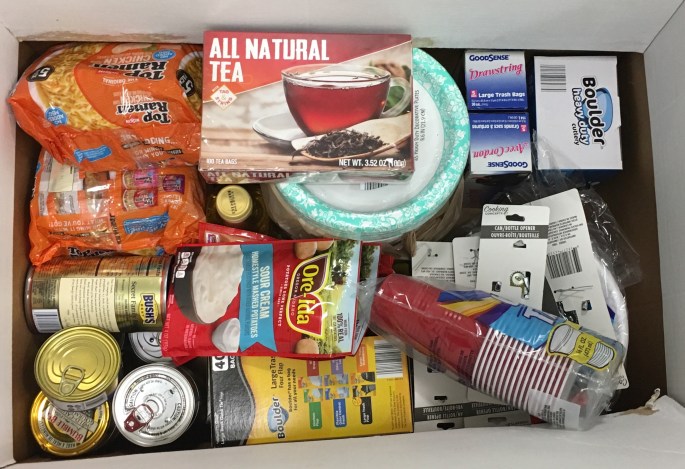
Now, many Floridians are seeking a way to help the Bahamas by donating canned foods, emergency kits, and such. At MLEC, this humanitarian prospect hasn’t been overlooked. Not even one day after students returned there, an effort to provide relief for the Bahamas was put in place. 

Throughout the week, students have been able to drop off items such as toiletries and canned goods in boxes put aside for said donations. The donations collected will be taken to the town of Miami Lakes, where it will be shipped to the Bahamas. 

“Any help or donations that you can send there, send it. The people of Bahamas really need it,” said Young. 


This week, I wanted to shed light on the destruction and devastation Hurricane Dorian caused on the Bahamas. It was absolutely heartbreaking to watch footage of houses getting flooded, and the parts of the island experiencing destruction that will be very difficult to come back from. But it’s not impossible. As mentioned in the article, there have already been efforts to provide relief in the Bahamas. It is important that we come together and help those in need in times like this instead of ignoring them. The residents in The Bahamas are, after all, human beings just like everyone else.