
Microwave Generation

Microwave Generation

By Rhobie Toussaint

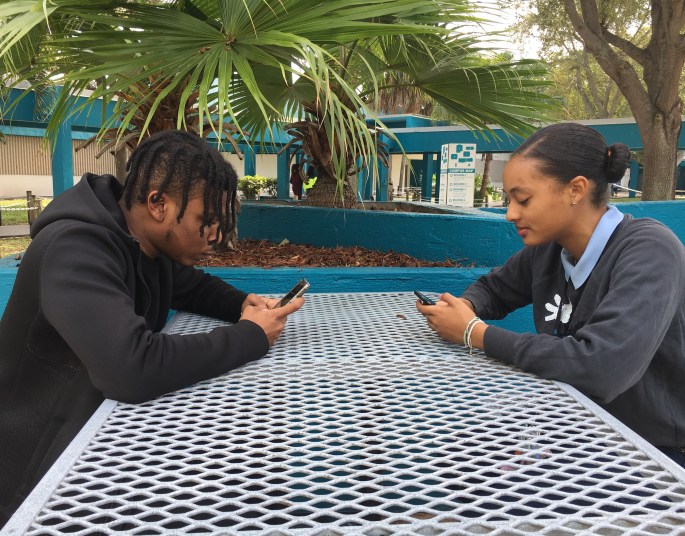
If one were to compare all of the major social media platforms that have appeared throughout the years, from MySpace to Facebook to Snapchat, a similar trend would be seen– modern means faster.

Coined by Raymond James, the term “Microwave Generation” sums up the impatience of Generation Z, those born between the years of 1995 and 2015. 

As people consume more information through the internet and different social media platforms, they also start to expect technological updates at a faster speed.

 For example, 4G, the fourth generation of cellular technology has an average speed of about 10 megabits per second (Mbps), but 5G, which is not fully researched or developed, is already being advertised by telecommunications companies. 

5G proposes some health concerns due to radiofrequency radiation and security violations. However, to most people the benefits seem to outweigh these dangers – with higher download rates, internet with even higher speed, and more, the microwave generation is bound to make some sacrifices for 5G.

The high expectations and need for constant renovation seen in Gen Z is ultimately what drives their impatience. Anything less than the speed and consumption of information that they are used to can lead to instant dissatisfaction.

“Most of the people our age can barely remember a time before the internet was as big as it is now, and in some ways, our generation does want that information more,” said Andrew Easterling, a junior at MLEC.

But this is not Gen Z’s fault. Nothing more and nothing less can be expected from a group of people that grew up during a time period of the latest smartphones and fastest internet speeds. If millenials or any other generation grew up with the same circumstances that Gen Z has, it is more than likely that they’d share similar traits.

“My parents are Gen X, and I’ve seen them, people even older, and everyone in between uses the internet for information, ” said Andrew.

Moreover, the expectations of more information in little time goes beyond those of Generation Z. It is a societal trend. Many who can have these technological advances are prone to expecting more– more technological advances, more information, more access. 

“From my understanding, most people actually want constant updates and upgrades, but that’s just because of the times we are living in,” said Adrien Rivero, a senior at MLEC. 

We have come to a point where it is only natural that people, of different age groups and ranges, are searching and yearning for quick renovation.

“I think people in general are always looking for change and improvement in whatever it is that they do,” added Rivero. 

This isn’t just a microwave generation. It is a microwave society. 

Backlash

Social Media Plus Gen Z Equals Continuous Backlash


In an era in which social media is prevalent and every move made is monitored by other users, it is almost impossible to always remain perfect in the eyes of the public. One misstep can cause backlash not even twenty four hours later or come back to haunt someone for years. Second chances, it seems, are rarely given in today’s society.

The sensitivity of Generation Z (Gen Z) is constantly debated, some saying that Gen Z gets offended by just about everything. Yet, others believe that growing up witnessing a great deal of violence, such as the influx of school shootings and suicides, has desensitized them.

While the sensitivity levels of Gen Z seem to be in a weird paradox, one thing’s for certain: they never seem to give anyone a break on social media.

If someone were to record themselves simply saying their thoughts in a manner people may not like, the post would go viral, comments would be filled with backlash, and following that would be mockery by other users.

Just in April, Justin Bieber pulled an April Fool’s prank, in which he made it seem like his wife, Hailey Bieber, was pregnant and bearing his child. The prank resulted in controversy and was claimed to be insensitive to women with infertility issues.

Other celebrities have received backlash for resurfaced statements that were made years ago.

Artist Cardi B has faced criticism for saying she used to drug and rob men during her days as a stripper. She responded saying on an Instagram post, “I made the choices I did at the time because I had very limited options. I have a past that I can’t change we all do.”

Whether an incident happened recently, or fifteen years ago, it won’t go unnoticed, appearing in retweets and joked about in memes. Sometimes an individual will receive hate and criticism for a statement they’ve apologized profusely and faced consequences for twenty years later.

“For them it might have been a lifetime ago and they might have changed. But when it resurfaces, it doesn’t seem that way to us,” said Abigaelle Barreauny, a sophomore at MLEC.

This doesn’t go to say that the person doesn’t deserve part of the backlash. However, for one to hear a comment he or she made at age sixteen, and be held accountable for it the rest of their lives  is simply unfair and unnecessary.

Not giving second chances ultimately limits growth within society. When the media is always reminding one of a mistake they’ve made, it becomes increasingly difficult to move on.

A society that is unforgiving and stuck on the past doesn’t leave room for improvement. It’s time that after criticizing someone for their wrongdoings, people either move on or let it go. Everyone needs room to grow.


Image source: Getty Images


Fixing

To Fix Or Not To Fix


Every relationship has its share of ups and downs, but there comes a point where couples must ask themselves a familiar question: do we fix what’s broken, or is it time to call it quits? If and when it comes time to answer that question, it is important to understand the situation at hand and how you got there before making any rash decisions.

There are different reasons why one may sense a shift in the relationship. Perhaps it’s always hard to come to an agreement, or there’s not enough time spent talking or being around each other.

       “You can feel the atmosphere around the person is different,” said Carlos Peña, a Junior at MLEC. “When you’re with someone long enough, you can tell if something’s off.”

       Sometimes these problems can be fixed, or at least worked on. If fighting’s the problem, work on communication. If the issue is not spending time with one another, try figuring out how to manage your schedules to make time for each other.

      “You can probably bounce back from whatever it is by talking to one another and trying to fix the issues occurring in the relationship…Communication is key,” said Tracy Bojorge, an MLEC senior.

      Although there are aspects of a relationship that could be rehabilitated, it can be extremely difficult to know when it’s time to pull the plug on the relationship. Some things can’t be fixed, no matter how hard both parties try.

      “If you’re not happy with the person, why would you stay with them? And If the relationship is toxic, it’s probably not going to get any better,” added Peña.

       There are also the situations in which only one of the two tries to fix the problem. When that’s the case, it is important that the person who is willing to try sees past the sweet talk, and focuses on the actions. A relationship will never work out if there’s only one person trying.

        “If you’re the person trying to fix the relationship, all your effort is useless,” said Lilia Gonzalez, a sophomore at MLEC. “If you’re the person who doesn’t care to fix things, you’re hurting the other person even more, so end things before more damage happens.”

       There’s a difference between giving things a shot and knowing when it’s not working out. So, for all the couples out there: don’t give up because situations get hard, but never stay in a relationship that you’re not happy or respected in.

Materialism

Why Materialistic Relationships Won’t Work

Originally published in The Harbinger


As Valentine’s Day rolls around, it’s a guarantee that there will be couples almost everywhere, holding hands, playfully fighting, kissing, or looking at one another with googly eyes. As one looks around though, they might notice that there are two types of couples: those enjoying each other’s love and company, and those together for all of the wrong reasons. Materialism is one of them.

As teenagers, we are constantly told that we don’t understand all there is to love and relationships. The common phrase, “you’re too young to know about love,” is repeated constantly. However, there are pairs that do understand that relationships are much more than gifts and a title, defying that belief.

“I’m not going to freak out if he doesn’t get me something [on an anniversary] because it shouldn’t matter,” said Naomi Ortega, a junior at MLEC.

“It shouldn’t matter. To be honest, the only gift that should matter is the time you spend with them on that day,” said Giancarlo Gonzalez, a junior and Ortega’s boyfriend.

One must understand that materialism in a relationship is not simply giving and receiving gifts. Gifts, handmade or store-bought, can be a way to show appreciation, but are not the only way.

“Sometimes I get [my boyfriend] a gift because I want to be romantic with him and make him feel special,” said sophomore Johanna Figueroa.

Her boyfriend, sophomore Jarell Burks, feels the same way. “Gifts are just a materialistic way to show how much we mean to each other,” he said.

There is no problem with giving one’s partner gifts all the time just because you want to; the issue comes when the gift-giving is all that there is to a relationship.

When that’s the case, the couple will care more about the luxurious aspect of receiving gifts instead of the in-depth meaning, which can lead to many problems.

“An issue with a materialistic relationship is that couples tend to always expect something to be given to them,” said sophomore Katherine Menedez. “Sometimes we can’t get a gift, and if that expectation isn’t met it can cause big problems and conflict in a relationship.”

There is no benefit in being materialistic: it takes out any significance in a relationship. A materialistic couple is not happier, more successful, nor do they function better than a couple that isn’t.

“A materialistic couple depends on gifts to keep the relationship stable. A couple that isn’t materialistic has other ways to do that, such as spending time together and just conversing,” added Gonzalez.

There is no true bond, love, or understanding in a materialistic relationship. All in all, being with someone for the material things they provide is pointless and brings no true fulfillment.

“The majority of people have materialistic tendencies, but it’s something you have to get rid of in order to be truly happy,” added Ortega.

Being in a relationship solely based on materialism won’t make anyone in the relationship happy, so don’t look for fulfillment in one. It won’t work.

Besides Christmas

You know Dasher and Dancer, but Not Umoji and Nia

Originally Published on The Harbinger

As one walks down the aisles of a department store, shining ornaments, inflatable snowmen, assorted stockings, and green and red can be seen all around, yet there is not one dreidel or kinara in sight.

What many fail to realize is that Christmas is not the only holiday in December, nor the most important; it’s simply the most commercialized.

Everyone knows the story of old Saint Nicholas, and yet there are many who don’t know the history behind Hanukkah and Kwanzaa, the days its celebrated, or even their duration.

“[The] majority of the people here celebrate Christmas,” said Allyson Bojorge, a senior at MLEC. “They know that there are individuals who celebrate different holidays, but they brush them off, and I think that makes some people feel left out. No one should have to feel left out.”

The first thing one must know about Hanukkah is that it takes place around December, sometimes late November. It always begins the 25th day of Kislev, which is the ninth month of the ecclesiastical year (Hebrew Calendar). However, this date varies within the more commonly used Gregorian calendar.

The story of Hanukkah is centered around the belief that miracles are indeed real, and that there is great strength in numbers.

It is said that when the Jews were able to take back their temple after it was destroyed, they only found enough oil to light the menorah for one day, but miraculously, it lasted for eight.  

Therefore, Hanukkah, the Jewish “Festival of Lights,” is celebrated for eight days, and on each day the ninth candle is used to light another candle on the menorah.

The days are filled with special songs, prayers, giving and receiving gifts, and eating foods fried with oil, such as latkes (potato pancakes). The dreidel, a spinning top with four sides, is also played with during the holiday.  

Just as Christmas has its importance to the different people that celebrate it, to many, Hanukkah has great significance and meaning.

“It’s a constant reminder of the miracles that impact our lives, an inspiring sense of hope and the ability to trust in what you believe to guide the future,” said Hadassah Weiner Friedman, a teacher at Sabal Palm Elementary School, who celebrates Hanukkah.

Kwanzaa, an African-American holiday, is celebrated from December 26th to January 1st. The holiday follows seven principles: Umoji, Kujichagulia, Ujima, Nia, and Imani (unity, self determination, collective work and responsibility, cooperative economics, purpose, creativity, and faith).

Every night a candle is lit on the kinara. There are seven in total—one black, three red, and three green—that each represent a principle. Each day, one of the principles is discussed, and typically stories are told, songs are sung, dances are performed, and conventional are meals eaten.

Like Hanukkah, Kwanzaa holds a special place in the hearts of those that celebrate it. The holiday is of much importance to them.

“During Kwanzaa, I usually spend the day with my whole family and we share nothing but laughter, food, music, and love,” said Stephanie Beaumont, a front desk manager at The Strand, a hotel on South Beach, and Kwanzaa lover. “No matter what, family is all we have. The holidays mean so much to me… that’s the time I get to be with my friends and family, and share fun moments [with] them.”

However, neither holiday is given enough recognition. There aren’t as many menorahs as ornaments and stockings seen at public places, and there are even fewer kinaras.

“I’ve never seen a kinara in person before. I’ve only seen them in pictures or movies,” said Briana Sterling, a sophomore at MLEC.

Christmas isn’t the only important holiday that takes place during the “holiday season,” and we shouldn’t act like that’s the case. It is unfair to prioritize one holiday when there is still so much to learn about the different cultures around us.