You know Dasher and Dancer, but Not Umoji and Nia
Originally Published on The Harbinger
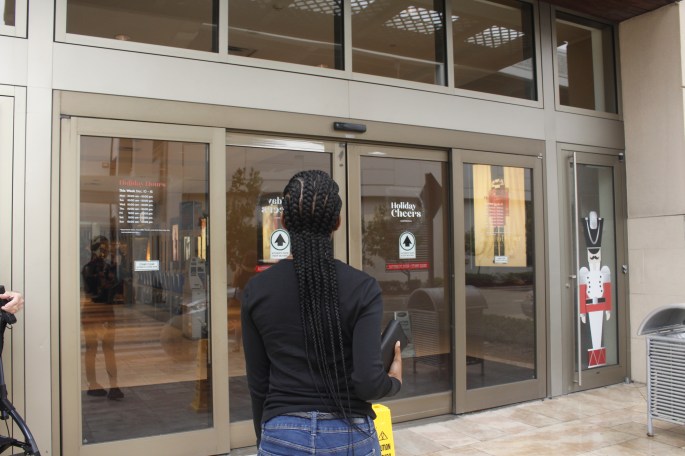
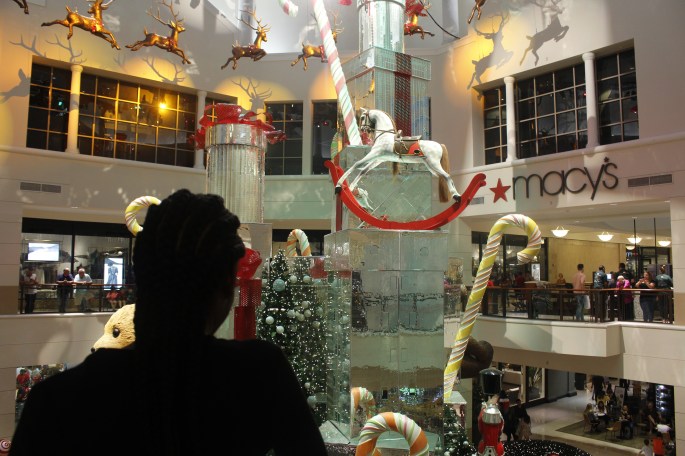
As one walks down the aisles of a department store, shining ornaments, inflatable snowmen, assorted stockings, and green and red can be seen all around, yet there is not one dreidel or kinara in sight.
What many fail to realize is that Christmas is not the only holiday in December, nor the most important; it’s simply the most commercialized.
Everyone knows the story of old Saint Nicholas, and yet there are many who don’t know the history behind Hanukkah and Kwanzaa, the days its celebrated, or even their duration.
“[The] majority of the people here celebrate Christmas,” said Allyson Bojorge, a senior at MLEC. “They know that there are individuals who celebrate different holidays, but they brush them off, and I think that makes some people feel left out. No one should have to feel left out.”
The first thing one must know about Hanukkah is that it takes place around December, sometimes late November. It always begins the 25th day of Kislev, which is the ninth month of the ecclesiastical year (Hebrew Calendar). However, this date varies within the more commonly used Gregorian calendar.
The story of Hanukkah is centered around the belief that miracles are indeed real, and that there is great strength in numbers.
It is said that when the Jews were able to take back their temple after it was destroyed, they only found enough oil to light the menorah for one day, but miraculously, it lasted for eight.
Therefore, Hanukkah, the Jewish “Festival of Lights,” is celebrated for eight days, and on each day the ninth candle is used to light another candle on the menorah.
The days are filled with special songs, prayers, giving and receiving gifts, and eating foods fried with oil, such as latkes (potato pancakes). The dreidel, a spinning top with four sides, is also played with during the holiday.
Just as Christmas has its importance to the different people that celebrate it, to many, Hanukkah has great significance and meaning.
“It’s a constant reminder of the miracles that impact our lives, an inspiring sense of hope and the ability to trust in what you believe to guide the future,” said Hadassah Weiner Friedman, a teacher at Sabal Palm Elementary School, who celebrates Hanukkah.
Kwanzaa, an African-American holiday, is celebrated from December 26th to January 1st. The holiday follows seven principles: Umoji, Kujichagulia, Ujima, Nia, and Imani (unity, self determination, collective work and responsibility, cooperative economics, purpose, creativity, and faith).
Every night a candle is lit on the kinara. There are seven in total—one black, three red, and three green—that each represent a principle. Each day, one of the principles is discussed, and typically stories are told, songs are sung, dances are performed, and conventional are meals eaten.
Like Hanukkah, Kwanzaa holds a special place in the hearts of those that celebrate it. The holiday is of much importance to them.
“During Kwanzaa, I usually spend the day with my whole family and we share nothing but laughter, food, music, and love,” said Stephanie Beaumont, a front desk manager at The Strand, a hotel on South Beach, and Kwanzaa lover. “No matter what, family is all we have. The holidays mean so much to me… that’s the time I get to be with my friends and family, and share fun moments [with] them.”
However, neither holiday is given enough recognition. There aren’t as many menorahs as ornaments and stockings seen at public places, and there are even fewer kinaras.
“I’ve never seen a kinara in person before. I’ve only seen them in pictures or movies,” said Briana Sterling, a sophomore at MLEC.
Christmas isn’t the only important holiday that takes place during the “holiday season,” and we shouldn’t act like that’s the case. It is unfair to prioritize one holiday when there is still so much to learn about the different cultures around us.




 Inside an Optimist's Mind